Other Case Studies


Schedule Your Security Assessment
Ready to strengthen your security posture? Call our experts at 813.945.8074 or schedule a consultation to discuss your physical security, penetration testing, or training needs.
Get Started

Campus Safety and Active Shooter Preparedness

Physical Security Failure Analysis

16 December, 2025

Brown University Shooting
Unforgivable Failures at Brown University
Author Credentials:
Over the past decade, since stepping out of military service, Travis Weathers has led and performed hundreds of covert facility breaches against Fortune 100 companies across sectors like healthcare, finance, retail, insurance, broadcast media, and banking, as well as critical infrastructure sites such as power distribution centers and educational institutions. These operations often carried objectives such as positioning to cause physical harm to on-air talent during prime-time news broadcasts or gaining access to physically and digitally sabotage critical infrastructure across some of America’s largest metropolitan areas. He has trained hundreds of professionals on these tactics, ranging from corporate security leaders to U.S. Special Operators. He has written security policies for organizations across multiple industries and has coached executives and their families on securing both their residences and their digital hygiene.
This real-world red team experience, essentially attacking organizations to test their defenses, has revealed a stark truth: complacency kills in security. Too often, the wrong people occupy critical protective roles, and organizations remain ill-prepared to detect or prevent determined attackers.
Crime scene tape on Brown University’s campus following the Dec. 13, 2025 mass shooting that left two students dead and nine injured.
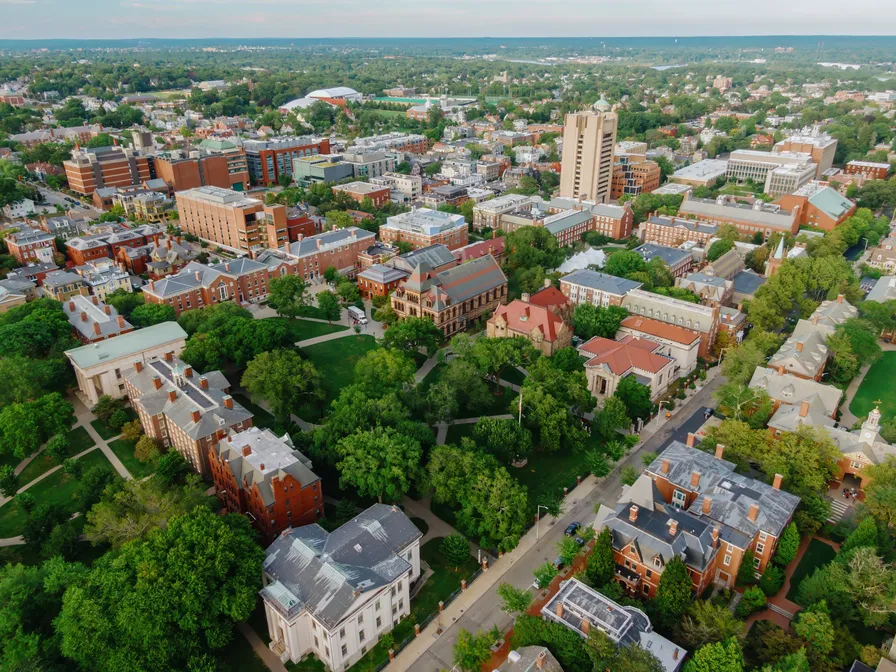
The mass shooting at Brown University this past weekend exposed a cascade of catastrophic failures in campus safety. A gunman freely walked into an exam review session, fired over 40 rounds, killed two students and wounded nine others, and then vanished without being caught. This tragedy has left the community outraged and demanding accountability. How could an Ivy League institution with an $8 billion endowment fail so utterly at its most basic duty – protecting human lives? The answer lies in across-the-board failures: outdated security technology, a grossly inadequate emergency response, and leadership negligence at every level.
Security Systems Full of Gaps and Outdated Tech
It is now painfully clear that Brown’s much-touted security infrastructure was riddled with blind spots. The shooter had little trouble entering the Barus & Holley engineering building – doors were unlocked and the perpetrator “went in basically without anyone noticing anything,” according to a former Providence police chief. Although the classroom required badge access, the heavy exam-week foot traffic likely nullified those controls. In other words, basic access control failed, granting the assailant easy entry.
Even more infuriating, Brown’s campus is supposedly saturated with surveillance – over 800 security cameras blanket College Hill. Yet not one camera captured the shooter’s face or identity, because “there just weren’t a lot of cameras in that [particular] building,” admitted Rhode Island’s Attorney General. Barus & Holley is an older building attached to a newer one, and somehow its halls and entrances had scant camera coverage. This gap allowed the masked gunman to slip away unrecognized. It’s an infuriating irony: students note that “we’re in such a surveillance state” on campus, yet when it truly mattered the surveillance “wasn’t used correctly at all”. The failure of Brown’s extensive camera network to produce useful evidence in this crisis is both frustrating and deeply alarming. If a network of hundreds of cameras can’t help during an active shooter emergency, one must ask: why were those cameras not properly placed or updated?
Slow, Disorganized Emergency Response
The emergency response to the shooting was chaotic and sluggish, compounding the initial security failures. Within 45 minutes of the first 911 call, Brown’s Department of Public Safety (DPS) alerted campus that a suspect was in custody – only to retract that claim minutes later when it turned out to be false. This premature, incorrect announcement likely created confusion and a false sense of relief that was quickly shattered. Later, DPS even reported gunfire in another area of campus, then “retracted this claim” as unfounded. These contradictory alerts suggest a breakdown in communication and situational awareness during the critical first hours.
Meanwhile, students and staff endured a prolonged campus lockdown sheltering in place with little clarity. The first active shooter alert hit phones at 4:22 PM Saturday, and the lockdown dragged on for hours into the night, only being lifted early the next morning once police finally cleared the area. In total, the campus was effectively on lockdown for the better part of a half day – many students hid for nine or more hours awaiting an all-clear. Unsurprisingly, people were uncertain how to stay safe during this drawn-out crisis. One doctoral student described huddling under a desk in a lab, terrified whether to even open the door when he heard police outside because the shooter’s whereabouts were unknown.
Such an extended, disorganized response reflects a lack of preparedness. Yes, law enforcement eventually mustered a massive presence (over 400 officers swarmed the area) and painstakingly searched all night. But had Brown’s security systems and protocols functioned properly from the start, the shooter might have been tracked or intercepted far sooner, avoiding a nine-hour plus campus paralysis. The delays and missteps in crisis management underscore that the response itself failed to match the urgency of the situation.
Accountability: Who Failed and Must Go
It is difficult to overstate how across-the-board these failures were – and how many people in charge let the community down. Every level of leadership must answer for this disaster, and frankly, some should be replaced. Key parties who failed include:
-
University Board of Trustees (Brown Corporation): The Board controls Brown’s finances and strategic priorities, yet evidently did not ensure that campus safety infrastructure kept pace with modern threats. With an endowment now reaching $8 billion, there is no excuse for having “old” buildings without cameras or for underfunding campus police. If the Board approved lavish capital projects or other spending but neglected basic security upgrades, their oversight was gravely deficient. The Board must be held to account for not prioritizing the preservation of life above all else.
-
Senior Administration (President and Top Officers): University leadership, led by President Christina Paxson, bears direct responsibility for campus safety policy and investments. They failed to create a culture of security-first urgency. It appears budgetary and strategic choices were made that left safety gaps – for example, not retrofitting older buildings with surveillance, and not boosting the training and staffing of campus police despite national active shooter trends. Notably, even as the endowment boomed, Brown’s administration was cutting jobs (over 100 positions eliminated in the past year) and even boosting executive compensation. Such choices signal misplaced priorities. The administration’s failure to proactively harden the campus and heed warning signs (like prior threats) is unforgivable. If Brown’s leaders could not foresee that an “open campus” with inadequate security might invite tragedy, then they have failed at their most solemn duty.
-
Campus Safety & Police Leadership (Brown DPS): The Department of Public Safety’s management has been in turmoil, and it showed. Just weeks before the shooting, both campus police unions took unanimous votes of no confidence in Brown’s DPS chief, Rodney Chatman, and his deputy. Officers complained that DPS leadership cut the number of active patrol officers and left technology problems unresolved, leading to “an all-time low in morale” and weakening the department’s ability to protect campus. Staff even alleged that safety protocols for bomb and shooting threats were handled inadequately, with concerns ignored by administrators. In light of these internal failures, it’s sadly unsurprising that when a real shooter struck, the DPS was caught flat-footed – lacking both the real-time intelligence (due to camera and tech issues) and the manpower to respond effectively. The current campus safety leadership has lost the trust of its own officers and the community; new competent leadership is needed to rebuild a department truly capable of keeping Brown safe.
-
Security Advisors and Consultants: Anyone – internal or external – who advised on or designed Brown’s security systems, policy, and operations must also answer for the glaring lapses, with the exception of recommendations and findings that Brown decided not to implement or failed to implement properly. If Brown conducted safety audits or hired consultants in recent years, they clearly did not identify or fix the “gaps in the university’s security and camera systems” that allowed the shooter to disappear. It is telling that law enforcement experts note many colleges (even wealthy ones) haven’t treated campus police and security as a top priority. Brown seems to fit this pattern, which reflects poor professional guidance and willful complacency. Those experts or administrators who claimed the campus was “secure enough” obviously got it wrong. Every advisor who rubber-stamped the status quo instead of pushing for improvements failed Brown’s students. Going forward, Brown must engage fresh expertise that won’t tolerate outdated cameras, lax building access, or under-resourced responders.
These groups each had a hand in this tragedy – through action or inaction – and each should face consequences. Brown’s students and community deserve nothing less than a clean sweep of complacency and incompetence.
An $8 Billion Endowment, Yet Safety Was Not Funded First
Perhaps the most galling aspect of this catastrophe is that it happened at an extremely wealthy institution. Brown University’s endowment reached $8 billion by the end of Fiscal Year 2025 (June 30, 2025) – an all-time high. In Fiscal Year 2025 alone, the endowment generated $853 million in gains and contributed $352 million to the operating budget. Brown is not lacking for resources by any stretch. And yet, when faced with a fatal crisis, the University’s critical safety systems were found wanting. This is a stark failure of priorities.
With billions in assets, Brown could easily have ensured state-of-the-art security: a modern CCTV network covering every building entrance, advanced door access controls, robust emergency communication tools, and a well-staffed, well-trained campus police force. These would cost a tiny fraction of $8 billion, but yield priceless protection. Instead, safety seems to have been on the back burner. As one security consultant observed, “funding for campus police departments is not a top priority, even for schools with ample resources”. Brown’s leadership fell into this trap – ample resources, but not enough will to use them for student safety.
It is simply unforgivable that an Ivy League with a massive endowment did not “prioritize the preservation of human life over everything else.” The University found money for other “strategic priorities,” but not to update a decades-old engineering building with cameras or to keep its DPS fully staffed. No explanation can justify this negligence. We often hear universities talk about budget constraints, but that rings hollow when Brown was simultaneously giving its president a pay raise and celebrating investment gains. The truth is about choices – and Brown’s choices failed to protect its own community.
No More Excuses: It’s Time for Change
This horrific incident should be a wake-up call not just for Brown University, but for all institutions that have delayed tough decisions on security. Active shooter events have become distressingly common (at least 75 school shootings occurred in the U.S. in 2025 alone), yet change has been lethargic. We are fed up with the platitudes and status quo. At Brown, students are literally petitioning en masse for improved security measures because they feel “students are doing a more effective job…than the police” at keeping each other safe. That should shame the officials responsible.
Going forward, nothing short of a top-to-bottom reform will suffice. Based on a quick Google Street View analysis of Brown’s campus, current access controls appear to be non-existent/highly in-effecient. Brown’s community must demand:
-
Comprehensive access control infrastructure: Implementation of RFID badging systems using hardened security credentials such as Elite keyed iCLASS SE or Desfire EV3 for all students, faculty, and staff. All building entrances must require badge authentication. Turnstiles or mantrap vestibules should enforce “one person per badge” to prevent tailgating—a critical vulnerability that allows unauthorized entry. Security vestibules requiring authentication to both enter and exit can trap unauthorized entrants. Access logs must be monitored in real-time, with alerts for anomalies such as doors propped open or duplicate entries.
-
Advanced surveillance with AI capabilities: Installation of modern surveillance systems with 100% coverage of all common areas—both interior (hallways, lobbies, stairwells) and exterior (entrances, walkways, parking areas). Cameras must include AI-powered analytics for firearm detection, people counting, person following/tracking, and loitering detection. Exterior cameras at parking areas and vehicle entry points should be LPR (License Plate Recognition) capable to identify and track vehicles entering and exiting campus. All systems must have real-time alerting capabilities that immediately notify security personnel and campus police when firearms are detected, loitering is detected, or suspicious behavior is identified. Integration of cameras with access control systems enables real-time verification that each badge swipe matches one person entering. Motion detection and behavioral analytics should flag suspicious activity such as loitering at doors or unauthorized access attempts. All footage must be stored with sufficient retention for investigations.
-
Quarterly security reviews and tabletop exercises: Regular security reviews must be conducted every quarter, including comprehensive audits of access logs, camera coverage gaps, and physical security infrastructure. Tabletop exercises should simulate active shooter scenarios, testing communication protocols, lockdown procedures, and coordination between campus police, local law enforcement, and emergency services. These exercises must identify gaps in response procedures and update emergency action plans accordingly.
-
Bi-annual security assessments: Two distinct assessment types must be conducted twice yearly: (1) Exhaustive walkthrough assessments examining all physical security controls, policies, and procedures with detailed documentation of vulnerabilities; and (2) Adversarial emulation assessments where professional red team testers attempt to breach campus security using real-world attack methods. These adversarial tests reveal how determined attackers would exploit weaknesses, providing critical intelligence for hardening defenses. Findings from both assessment types must result in documented remediation plans with timelines and accountability.
-
Threat assessment and emergency response capabilities: Establishment of a cross-functional Threat Assessment Team (comprising security, HR, legal, and administration) trained to evaluate reports of concerning behavior and take proactive action. Comprehensive active shooter response training using the “Run, Hide, Fight” protocol for all students and staff. Emergency communication systems must include PA announcements, text alerts, and mobile app notifications. Floorplans should be marked with safe hiding areas and exit routes, with this information integrated into training materials.
-
Expanded, intensive training and staffing: Campus police and emergency teams require expanded staffing levels and intensive training, potentially bringing in outside experts to instill best practices. All security personnel must be trained in de-escalation techniques, threat recognition, and rapid response protocols. Regular drills—conducted sensitively but effectively—must test emergency lockdown procedures and coordination with local law enforcement.
-
Transparent accountability and remediation: Transparent accountability for the failures—resignations or removals if needed—and a published plan detailing how each identified gap will be fixed, with timelines and responsible parties. Post-incident protocols must include root-cause investigations and security weakness reviews after any threat or incident.
-
Cultural shift prioritizing safety: A fundamental cultural shift where safety is treated as the non-negotiable foundation for everything else. This means funding and attention first to life-saving measures, not as an afterthought. All students, faculty, and staff must be trained to challenge unknown persons without proper badges and report unusual activity. Security cannot be seen as just the police department’s job—everyone must feel responsible for maintaining a secure campus.
Brown University has the means and now the tragic motivation to make itself a model of campus safety – if its leaders have the will. No student or parent should ever have to wonder if a school is skimping on their security. The preservation of human life must be the ultimate priority, far above image or endowment growth.
In sum, the Brown shooting revealed an unacceptable, across-the-board failure to protect the campus. It cannot be swept aside. Those in charge who allowed deprecated technology, poor preparedness, and complacency to persist must be held accountable. With lives lost and dozens scarred, “sorry” is not enough – concrete action and new leadership are needed. Brown’s $8 billion fortune could not shield its students this time, but by decisively correcting these failures, the University can at least honor the victims and ensure such a nightmare never happens again on College Hill. No more excuses – it’s time to prioritize safety, replace those who failed, and make real changes now.
Sources
-
Associated Press (via ABC News) – “Brown University shooting leaves students, community frustrated with official response.” Dec. 16, 2025
-
The Washington Post – “An infuriating wrinkle in the Brown University shooting” (Opinion). Dec. 15, 2025
-
Facilities Dive – “Few cameras, open doors at Brown University building where shooting occurred.” Dec. 15, 2025
-
Brown Daily Herald – “Second Brown police union issues vote of no confidence in police chief, deputy chief.” Oct. 22, 2025
-
Brown Daily Herald – “‘Unimaginably tragic’: Tracing the 50 hours after the shooting at Brown.” Dec. 16, 2025
-
Brown Daily Herald – “Brown’s endowment reaches $8 billion after fiscal year 2025 return” ($8 billion endowment as of June 30, 2025; $853 million in FY 2025 gains)
-
GoLocalProv News – “Brown Endowment Jumps to More Than $8 Billion….” Oct. 19, 2025
-
Associated Press (via WISN/ABC) – Coverage of Brown Univ. shooting and investigation. Dec. 2025
-
CNN (via Facilities Dive) – Statistics on 2025 shootings (Gun Violence Archive data)
Ready to Secure Your Organization?
Partner with our team of Service-Disabled Veteran-owned security experts to protect your people, facilities, and operations. Schedule your consultation and discover how we can strengthen your security posture.